Solar Batteries in Pakistan: 2026 Backup Power Guide
Solar panels save money by day, but solar batteries in Pakistan are what keep your lights on at night and during load-shedding. In 2026, affordable lithium storage has turned ordinary rooftop systems into round-the-clock power solutions for homes and businesses in Islamabad and beyond.
This guide explains how solar batteries work, which chemistry suits Pakistani conditions, and how to size a bank that actually lasts. Choose well and you gain true energy independence; choose poorly and you replace cells every few years.
Why Solar Batteries in Pakistan Are Essential in 2026
Net metering offsets your bill, but it does nothing when the grid itself goes down. Batteries store surplus daytime generation so you can run fans, lights, routers, and even air conditioners after sunset or during an outage.
With grid reliability still patchy and tariffs climbing, storage is no longer a luxury. A reputable solar company in Islamabad can design a hybrid system that blends grid, solar, and battery power seamlessly.
- Outage protection: critical loads stay powered during load-shedding.
- Self-consumption: use your own solar at night instead of grid units.
- Peak shaving: avoid expensive peak-hour tariffs.
- Quiet backup: no fuel, no fumes, unlike a diesel generator.
Lithium vs Tubular: Which Battery Wins?
The two dominant options in Pakistan are lithium-ion (LiFePO4) and lead-acid tubular batteries. Each has a place, but their economics differ sharply over a full lifecycle.
Key Differences
Tubular batteries cost less upfront and tolerate rough handling, which keeps them popular. Lithium cells cost more to buy but last far longer, charge faster, and deliver more usable capacity, making them cheaper per kWh over time.
| Feature | Lithium (LiFePO4) | Tubular Lead-Acid |
|---|---|---|
| Cycle life | 4,000–6,000 | 1,200–1,500 |
| Usable depth | ~90% | ~50% |
| Charge speed | Fast | Slow |
| Maintenance | None | Water top-ups |
| Upfront cost | High | Low |
For most 2026 installs, quality lithium storage delivers the best long-term value. You can compare trusted solar batteries in Pakistan to match the right chemistry and capacity to your budget.
How Much Battery Capacity Do You Need?
Sizing starts with your backup goal: which loads must run, and for how long. List essential appliances, add their wattage, and multiply by backup hours to estimate the kWh you must store.
- List critical loads: lights, fans, fridge, router, pump.
- Add the watts: total the running load you want covered.
- Set backup hours: decide how long you need autonomy.
- Add headroom: size 20–30% larger for depth and aging.
A typical Islamabad home covering fans, lights, and a fridge for an evening needs roughly 5–10 kWh of usable lithium storage. Larger homes running AC need 15 kWh or more.
Does Temperature Affect Battery Life?
Yes, heat is the biggest enemy of battery longevity. Islamabad’s summers can push unventilated store rooms past safe limits, accelerating degradation in any chemistry.
Install batteries in a cool, dry, ventilated space away from direct sun. Lithium packs with a built-in battery management system (BMS) handle temperature swings better, but placement still matters. The International Energy Agency notes that thermal management is central to storage lifespan worldwide.
Pairing Batteries With the Right Inverter
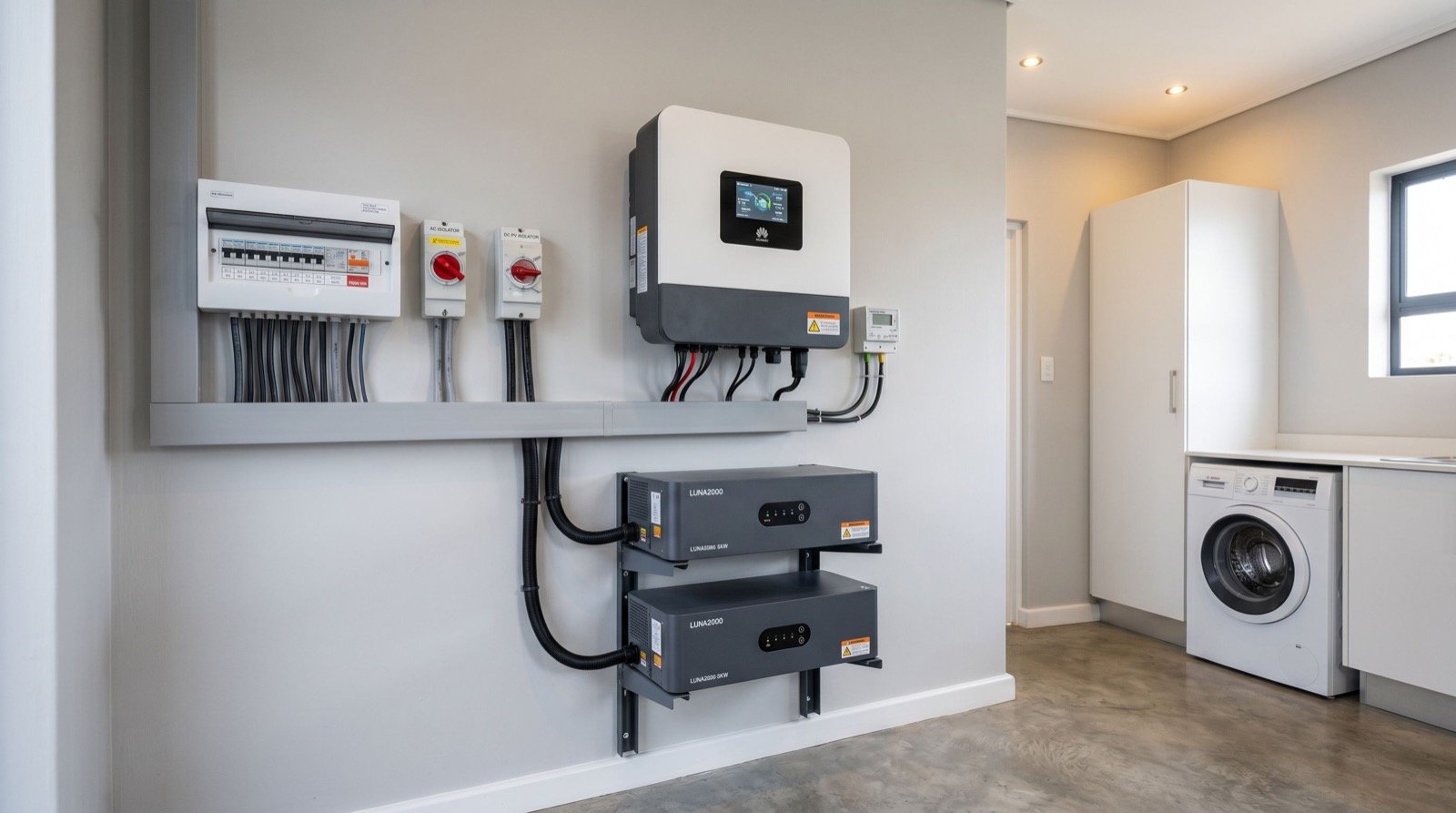
Your battery is only as good as the inverter that charges and discharges it. Hybrid inverters manage solar, grid, and battery intelligently, switching sources in milliseconds during an outage.
An experienced local team will match inverter voltage, charge current, and communication protocol to your specific battery, avoiding the mismatches that kill performance and warranties.
- Voltage match: 48V systems suit most modern lithium banks.
- Comms link: CAN/RS485 lets the BMS talk to the inverter.
- Charge control: correct current prevents overcharging.
Maintenance and Safety Tips
Lithium systems are largely maintenance-free, but good habits extend their life. Keep terminals clean, ensure ventilation stays clear, and monitor the BMS app for cell imbalances or faults.
For tubular banks, check electrolyte levels monthly and top up with distilled water only. Never mix old and new cells, and always use a fuse and surge protection on the battery circuit.
Lithium Battery Costs and Payback in 2026
Lithium prices have fallen sharply over the past three years, narrowing the gap with lead-acid. When you count replacements, a tubular bank that lasts four years is often costlier than one lithium pack lasting a decade.
Payback depends on how you use the battery. Homes that mainly shift solar to evening use recover costs faster than those keeping cells idle for rare outages. The more cycles you use productively, the better the return.
- Daily cycling: storing solar for night use maximizes value.
- Tariff arbitrage: charging off-peak and using on-peak adds savings.
- Generator offset: replacing diesel runtime cuts fuel and maintenance bills.
Signs Your Battery Bank Is Failing
Catching degradation early prevents being left in the dark. Watch for these warning signs and schedule a professional check if they appear.
- Shorter backup: the bank drains faster than it used to.
- Swelling or heat: physical bulging or unusual warmth signals danger.
- BMS faults: the app flags cell imbalance or repeated errors.
- Slow charging: the bank struggles to reach full state of charge.
Never ignore a swelling lithium pack or a tubular battery that boils dry. Both are safety hazards that need prompt, professional attention rather than a DIY fix.
Frequently Asked Questions
How long do solar batteries in Pakistan last?
Quality lithium (LiFePO4) batteries last 8–12 years or 4,000–6,000 cycles with proper cooling, while tubular lead-acid typically lasts 3–5 years. Heat, depth of discharge, and charging quality all influence the real-world figure.
Can I run an air conditioner on battery backup?
Yes, but it needs a larger bank and a suitably rated inverter. A single inverter AC can draw 1–1.5 kW, so plan for extra kWh and headroom if AC backup is a priority.
Are lithium batteries safe for home use?
LiFePO4 chemistry is very stable and includes a BMS that prevents overcharge and overheating. Installed by professionals with proper fusing and ventilation, they are among the safest storage options available.
Do I need batteries if I have net metering?
Not strictly, but net metering alone offers no protection during outages. Adding storage gives you true backup and lets you use your own solar power at night, which net metering cannot do.
Final Thoughts
The right solar batteries in Pakistan turn a daytime saving into genuine 24-hour energy freedom. In 2026, lithium storage offers the best lifecycle value for most homes and businesses. Size your bank around real loads, keep it cool, pair it with a quality hybrid inverter, and lean on professionals who stand behind their work.