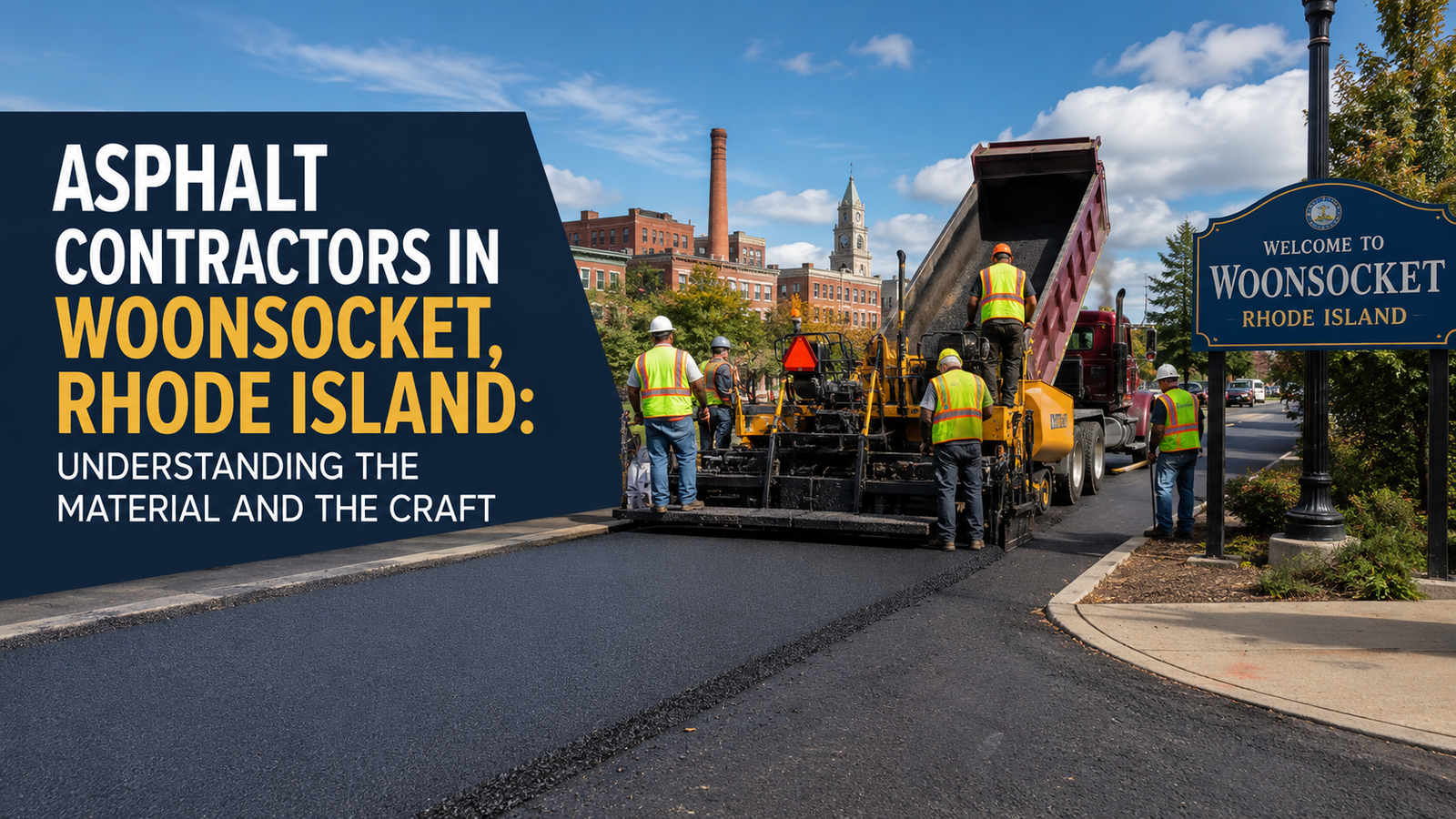
Asphalt is the dominant paving material for driveways, parking lots, roads, and paved surfaces across Rhode Island and for good reason. It is durable, flexible, cost-effective relative to alternatives like concrete, and well-suited to the freeze-thaw climate of New England when properly installed and maintained. Asphalt Contractor Woonsocket specialize in working with this material across its full lifecycle: installing new surfaces, resurfacing deteriorated ones, maintaining them through sealcoating and crack repair, and eventually replacing them when they reach end of life. This guide explains what asphalt is, why it performs well in Rhode Island, and what asphalt contractors in Woonsocket provide.
What Asphalt Is and Why It Works in Rhode Island
Asphalt more precisely, hot mix asphalt (HMA) is a composite material consisting of aggregate (crushed stone, sand, and gravel) bound together by a petroleum-based binder called bitumen or asphalt cement. The aggregate typically makes up 90 to 95 percent of the mix by weight; the binder makes up the remainder but is the material that holds everything together, gives asphalt its characteristic dark color, and provides the flexibility that distinguishes asphalt from more brittle materials like concrete.
Asphalt’s flexibility is its most important advantage in Rhode Island’s climate. Unlike concrete, which is rigid and fails through cracking when underlying soils move or when thermal stresses exceed the material’s tensile strength, asphalt can flex slightly with freeze-thaw movement and traffic deflection without catastrophic failure. This flexibility makes asphalt more forgiving of the soil movement and frost heave that characterize New England winters, and it makes asphalt easier and less expensive to repair when surface damage does occur.
Asphalt also has a significant advantage in winter maintenance. The dark color of asphalt absorbs solar radiation more effectively than light-colored concrete, helping to melt snow and ice faster. Asphalt surfaces are also generally smoother than concrete, which makes them easier to plow effectively. In a community like Woonsocket where significant snowfall accumulation is a seasonal reality, these properties translate into practical winter maintenance advantages.
How Hot Mix Asphalt Is Produced and Delivered
Hot mix asphalt is produced at asphalt plants facilities that combine aggregate, heated bitumen binder, and any required additives in precise proportions specified by the mix design. The mixed material exits the plant at temperatures between 275 and 325 degrees Fahrenheit and is loaded directly into delivery trucks. Temperature is critical asphalt must be placed and compacted while it is still hot enough to flow and consolidate properly. Once it cools below about 175 degrees Fahrenheit, it becomes too stiff to compact adequately.
This temperature sensitivity is one of the reasons that asphalt paving in Woonsocket is a seasonal activity, typically limited to the months from May through October when ambient temperatures are warm enough to allow the asphalt to retain adequate heat during transport and laydown. Early spring or late fall paving is possible under favorable conditions, but experienced contractors monitor temperature forecasts carefully and may decline to pave if temperatures are expected to drop significantly before the asphalt can be properly compacted and cooled.
The distance from the asphalt plant to the project site affects material temperature at delivery. Woonsocket is served by asphalt plants in the Providence County and northern Rhode Island area that can deliver material within a practical temperature range. Contractors who know the local plant network and plan project logistics around delivery timing produce better results than those who allow asphalt to arrive at the site too cold to compact properly.
Asphalt Mix Design for Rhode Island Conditions
Not all asphalt mixes are created equal, and the specific mix design used on a project significantly affects its durability and performance. Rhode Island’s transportation department has worked to improve asphalt mix performance for state road projects, including increasing polymer content in the binder to improve flexibility and resistance to rutting and cracking. These same principles apply to private paving projects.
Polymer-modified asphalt binders which incorporate styrene-butadiene-styrene (SBS) or other polymers into the bitumen maintain better flexibility at low temperatures (reducing cold-weather cracking) and better stiffness at high temperatures (reducing rutting). For Woonsocket driveways and parking lots that must perform through both Rhode Island winters and New England summers, polymer-modified mixes provide meaningfully better durability than unmodified base binders.
Aggregate gradation the specific size distribution of the crushed stone and sand particles in the mix affects both the mechanical strength of the asphalt and its surface texture. Dense-graded mixes, which have aggregate particles filling a continuous range of sizes with relatively few voids, provide the best combination of strength and impermeability for most Woonsocket paving applications.
Asphalt Maintenance Services in Woonsocket
The longevity of asphalt surfaces in Woonsocket’s climate depends significantly on proactive maintenance. Asphalt begins to oxidize from the moment it is placed the bitumen binder gradually loses volatiles to evaporation, becoming harder and more brittle over time. UV radiation from the sun accelerates this process. Water infiltration through surface cracks reaches the asphalt-aggregate interface and the underlying base, weakening the structure and accelerating freeze-thaw damage. Proactive maintenance interrupts these processes and extends surface life.
Sealcoating is the primary preventive maintenance treatment. Applied as a liquid emulsion that cures to a protective film, sealcoating fills micro-surface voids, slows oxidation of the binder, resists water infiltration, and refreshes the surface appearance. A Woonsocket driveway sealed every 3 to 5 years will remain in serviceable condition significantly longer than an identical unsealed driveway. Commercial lots with higher traffic may benefit from more frequent applications.
Crack sealing with rubberized joint sealant closes cracks before they allow water infiltration. The rubberized material is flexible enough to expand and contract with temperature changes, maintaining the seal through freeze-thaw cycles. Crack sealing is most effective when performed on cracks that have not yet reached the subbase once water has reached and begun to saturate the base material, crack sealing alone is no longer sufficient and more extensive repair is needed.
Frequently Asked Questions About Asphalt Contractors in Woonsocket
What is the difference between asphalt and blacktop? These terms are often used interchangeably in New England. Both refer to hot mix asphalt. “Blacktop” is the colloquial term commonly used in the Northeast for the material used in residential driveways and smaller commercial paving applications.
How long should I stay off a new asphalt driveway? Vehicles should generally stay off a new asphalt surface for at least 24 to 48 hours after paving longer in hot weather, when the asphalt remains softer for an extended period. Foot traffic can resume after several hours. High heels and bicycle kickstands should be kept off the surface for the first several weeks as the asphalt continues to cure and harden.
When is the right time to sealcoat a new asphalt driveway in Woonsocket? New asphalt should be allowed to cure for at least 90 days and preferably a full year before the first sealcoat application. Sealcoating too early traps gases from the curing process and can prevent the asphalt from properly hardening. After the initial wait, sealcoating every 3 to 5 years is the typical maintenance recommendation for Woonsocket’s climate.